
Concerns & Lessons Learned
Data Centers
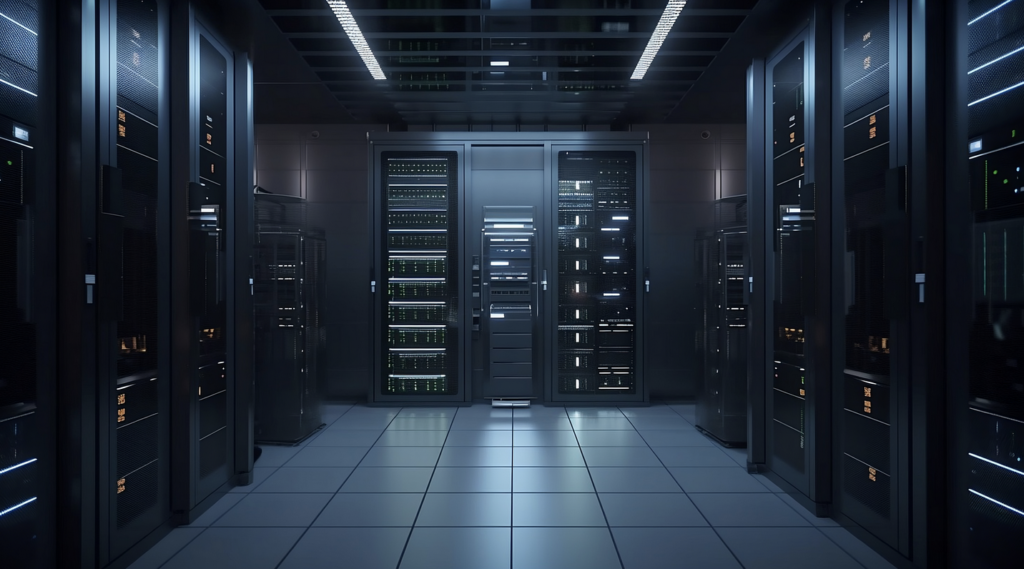
High Energy Demand and Grid Strain
- The concern: Data centers require immense, continuous electrical power to operate servers and cooling systems. The rapid rise of artificial intelligence (AI) has significantly increased power density requirements per facility.
The aggregate power demand can strain regional electrical grids, potentially competing with residential needs and complicating utility efforts to transition to renewable energy sources.
How it is being addressed: Newer facilities are transitioning from passive energy consumers to active grid participants. Operators are increasingly investing in dedicated on-site power generation (such as small modular reactors or natural gas generation serving as a transition bridge), building localized microgrids, and utilizing advanced software to shift non-urgent computing workloads to hours when surplus renewable energy is available on the grid.
High Water Consumption for Cooling
The concern: Traditional data centers rely on evaporative cooling systems that consume millions of gallons of water daily to prevent high-density computer chips from overheating.
In arid regions or areas experiencing drought, large-scale water extraction can deplete local aquifers and put pressure on municipal water supplies.
How it is being addressed: Modern data centers are moving away from water-intensive evaporative air cooling toward liquid cooling systems, such as direct-to-chip cooling or immersion cooling (where servers are submerged in a non-conductive dielectric fluid). These closed-loop systems require minimal to no water consumption during standard operations.
Noise Pollution
The concern: The massive industrial fans and backup diesel generators used by data centers generate a constant, low-frequency hum.
Continuous industrial noise can degrade the quality of life for residents living in proximity to the facility, leading to stricter zoning laws and community pushback.
How it is being addressed: New facility designs incorporate advanced acoustic engineering. This includes building acoustic walls, installing state-of-the-art silencers on exhaust systems, using geometric building layouts to deflect sound inward, and replacing diesel backup generators with cleaner, quieter hydrogen fuel cells or battery backups.
Further reading:

Baker-Brian, A. (2026, January 26). Data Centers in 2026: 5 trends reshaping power, cost, and resilience. EnerSys. https://www.enersys.com/en/blog-articles/data-centers-five-trends-reshaping-power-cost-and-resilience/#:~:text=Operational%20expenditures%20(OpEx)%20remain%20high,compounded%20by%20rising%20energy%20demand.

The CoreSite Team. (2026, February 25). Data Center Outlook 2026: Power and cooling challenges and solutions are top of mind. CoreSite. https://www.coresite.com/blog/data-center-outlook-2026-power-and-cooling-challenges-and-solutions-are-top-of-mind#:~:text=%E2%80%9CData%20centers%20are%20shifting%20from,improve%20reliability%20and%20manage%20costs.%E2%80%9D

Cummins Inc. (2026, May 6). Market trends shaping data center strategy in the age of AI | Cummins inc.. Cummins. https://www.cummins.com/en-na/news/2026/05/06/market-trends-shaping-data-center-strategy-age-ai
Battery Energy Storage Systems (BESS)
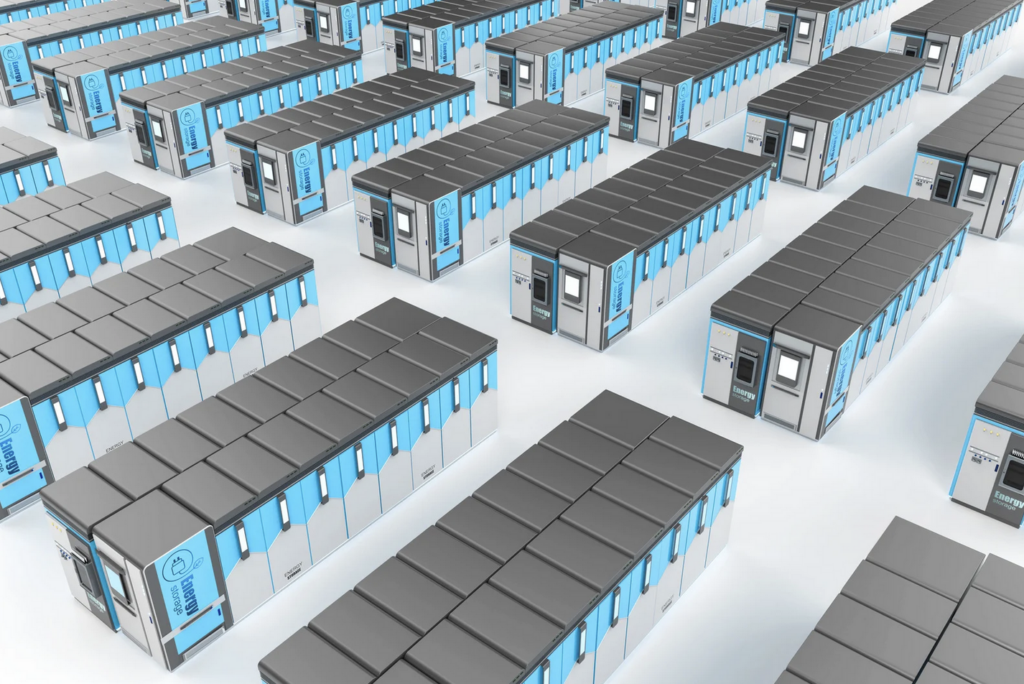
Thermal Runaway and Fire Risk
- The concern: Certain battery chemistries, particularly standard lithium-ion, can experience “thermal runaway”—a chain reaction where an internal short circuit or defect causes temperatures to rise uncontrollably, resulting in intense, difficult-to-extinguish fires.
BESS fires can burn at extremely high temperatures, propagate quickly from one battery cell to another, and release toxic gases during combustion, creating hazards for local emergency responders.
How it is being addressed: Industry standards have shifted toward more stable chemical compositions, such as Lithium Iron Phosphate (LFP) or sodium-ion, which exhibit significantly higher thermal thresholds. Furthermore, newer installations are strictly designed in modular, segregated outdoor enclosures to prevent fire propagation, and utilize localized liquid-submersion or advanced chemical fire suppression systems at the module level.
Environmental and Suppy Chain Footprint
The concern: The extraction and processing of the raw materials required for large-scale utility batteries (such as lithium and cobalt) involve resource-intensive mining practices.
Mining operations can carry significant localized environmental impacts, and heavily concentrated overseas supply chains expose developers to geopolitical vulnerabilities.
How it is being addressed: The industry is diversifying away from constrained materials by scaling alternatives like sodium-ion technologies, which utilize abundant and globally distributed raw materials. Additionally, new facilities are designing systems with “closed-loop” principles in mind, ensuring components are standardized for straightforward disassembly, end-of-life recycling, and material reclamation.
Siting and Public Safety Zoning
The concern: Because BESS installations are critical for grid stability, utilities often need to place them close to electrical substations, which are frequently located near commercial or residential zones.
Local municipalities often implement temporary moratoriums on construction due to a lack of clear safety data, specialized training for local firefighters, or established evacuation protocols.
How it is being addressed: Developers of new facilities now mandate comprehensive Hazard Mitigation Analyses (HMA) prior to permitting. These analyses are shared directly with local fire departments to establish standardized emergency action plans, defined exclusion zones, and remote monitoring systems that allow operators to isolate a malfunctioning container long before a critical incident occurs.
Further reading:

Cummins Inc. (2026, May 6). Market trends shaping data center strategy in the age of AI | Cummins inc.. Cummins. https://www.cummins.com/en-na/news/2026/05/06/market-trends-shaping-data-center-strategy-age-ai

Environmental Protection Agency. (n.d.). EPA. https://www.epa.gov/electronics-batteries-management/battery-energy-storage-systems-main-considerations-safe#:~:text=Fire%20Suppression%3A%20Lithium%20battery%20fires,nearby%20residents%20and%20first%20responders.